
Blog
Posted on March 27, 2012 in Latest News

10th Anniversary of LASIK in the Military Celebrated by Fort Lauderdale Vision Surgeons
Fort Lauderdale, FL — Since April 1, 2002, the United States Army has been providing LASIK surgery to front-line soldiers through its Warfighter Refractive Eye Surgery program, joining both the Navy and Air Force in supporting the use of vision correction procedures to help combat troops avoid fogged spectacles and lost contact lenses. Dr. Marc Bosem, a LASIK surgeon in Fort Lauderdale at the Correct Vision Laser Institute, and his partner Dr. Barry Concool say they are proud to celebrate the momentous installment of a beneficial program for U.S. troops and hope to see the continued endorsement of refractive surgical procedures in the military as a way to improve the safety of Army personnel. Both Drs. Bosem and Concool say they are excited to have witnessed firsthand the beneficial impact of vision correction in Fort Lauderdale and will continue to pledge their support in providing the highest quality services and procedures to all patients struggling with vision impairment.
Preceded by an Army observation of U.S. Rangers during extreme combat training who had undergone LASIK, the Warfighter Refractive Eye Surgery program has been in existence for ten years and is offered at eight different surgical centers across the country. Army officials estimate that 35-50% of Army troops require corrective lenses and 70-80% of eligible soldiers might request a LASIK procedure, although not all may be candidates for the treatment. Dr. Bosem says readiness to perform duties that require excellent vision without the need for glasses or contact lenses is a significant factor in many professionals’ decision to undergo a laser vision correction procedure. He says his practice sees a number of servicemen, including police officers and firefighters, who want the added security of not having to worry about breaking or losing glasses or contacts thanks to a procedure like LASIK in Ft. Lauderdale.
Offering a number of other surgical vision procedures ranging from astigmatism correction to cataract surgery in Fort Lauderdale, Drs. Bosem and Concool say the advancement of laser eye surgery over the past ten years provides patients even more solutions to troubled vision. Whereas in the past patients who were not candidates for LASIK surgery were left without a surgical option, Dr. Concool says they now have access to a host of custom procedures that can treat each patient’s individual needs. He also says blade-free technology is improving surgeons’ ability to achieve the most precise, effective results in patients.
Both Dr. Bosem and Dr. Concool say they are thankful for the opportunity to have seen the development of LASIK surgery over the years and its utilization in the assistance of men and women dedicated to the safety and security of the United States. They add that they are excited about what the future will bring for laser surgery involvement in the military as well as police forces and other branches of public service.
About Marc E. Bosem, MD
Dr. Marc Bosem graduated from the University of Miami Medical School and completed his residency in ophthalmology at the University of Texas Health Science Center. He is certified by the American Board of Ophthalmology and as a LASIK surgeon from Moria and Bausch & Lomb, publishing a number of articles on laser vision correction procedures. Having performed eye surgery since 1992, Dr. Bosem is also among the first in the U.S. to perform many of the most advanced techniques in LASIK and PRK. He is a member of the American Academy of Ophthalmology, the Miami Ophthalmologic Society, and the International Society of Refractive Surgery.
About Barry Concool, MD
A graduate of Columbia University, Dr. Barry Concool earned his medical degree from the Mount Sinai School of Medicine, where he completed his three-year residency in ophthalmology. He was selected as one of two residents in the country to receive the fellowship of the American Society of Cataract and refractive Surgery. Dr. Concool is a board-certified Diplomate of the American Board of Ophthalmology and has been named one of the Top 5 Surgeons in the U.S. by LaserVision, in addition to receiving the VISX “Star” as one of the best LASIK surgeons in the nation. He has performed over 15,000 LASIK procedures and is dedicated to continued education through teaching and proctoring. Dr. Concool is a member of the American Society of Cataract and Refractive Surgery, the International Society of Refractive Surgery, and the American Academy of Ophthalmology.
Correct Vision Laser Institute is located at One SW 129th Avenue, Suite 209 in Pembroke Pines, FL, reachable at (954) 501-0822, and 2300 N Commerce Pkwy Suite 201 in Weston, FL. It can also be contacted online via the website correctvision.com or facebook.com/pages/CorrectVision-Laser-Institute/360910644820.
Contact:
Rosemont Media
Aaron Hurst
(858) 200-0044
www.rosemontmedia.com
###
Posted on March 23, 2012 in LASIK, Specials
Posted on March 16, 2012 in LASIK, Latest News
Steve VogelWashington Post Staff Writer
April 1, 2002; Page A1
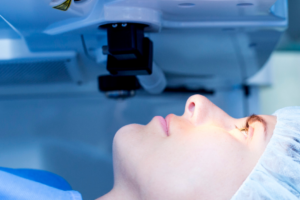
Army Sgt. Kevin Hayes lay flat on his back in a circular operating room at Walter Reed Army Medical Center, his right eye pried open directly beneath a laser. “Acquired,” a computer attached to the laser announced in a metallic voice, signaling that the machine was tracking Hayes’s pupil.
A motorized instrument sliced an opening in Hayes’s cornea. Lt. Col. Scot Bower, an Army surgeon, pressed a foot pedal, triggering a laser that delivered pulses to reshape the cornea to Hayes’s prescription. Within minutes, Hayes, 24, was recuperating in a waiting area, slightly dazed behind protective eyeshades but no worse for the wear.
The Army is building itself a better soldier, one eye at a time.
After years of skepticism, the military is embracing laser eye surgery with enthusiasm, envisioning soldiers in Afghanistan and other hot spots who no longer have to worry about glasses fogging up or contacts popping out during combat. “It makes people into potentially better soldiers, better able to perform their duties,” said Bower, director of refractive surgery at Walter Reed, in Northwest Washington.
“They’re kind of tuned up, if you will,” said Col. William P. Madigan Jr., assistant chief for ophthalmology at Walter Reed.
Just two years ago, anyone who had undergone such surgery would have been disqualified from active duty.
Now, laser eye surgery is not only allowed, but it is also actively promoted by the military. Today, Walter Reed is launching its Warfighter Refractive Eye Surgery Program. There and at other Army hospitals across the country, the surgeons expect to correct the vision of thousands of soldiers in coming years. The Air Force and Navy offer similar programs.
“There’s a huge demand for the procedure — probably more demand than we’re going to be able to handle,” Bower said.
The about-face came after a Department of Defense medical panel, after evaluating several years of research by the Navy, concluded that concerns about laser surgery damaging the structure of the eyes had not been borne out and that — to the contrary — the surgery was a way to improve the fighting forces. Congress subsequently approved $15 million for the program.
Officials are quick to point out that the laser surgery is strictly voluntary. “It’s not a program to build an Uebermensch,” Madigan said.
Nonetheless, many soldiers are encouraged by superiors to have the surgery. “Commanders are seeing the potential and wanting to have their troops treated,” Bower said. “People are seeing it as combat readiness, enhancing the fighting force.”
Eyeglasses have long been troublesome for soldiers, and modern warfare has made the problem worse. Increasingly, the military is employing sophisticated weapons and gadgets where glasses can get in the way. Soldiers who wear glasses need prescription inserts to wear gas masks. The same is true of goggles being developed to protect soldiers from enemy lasers.
“If your glasses steam up or fall off, you’ve become a liability,” Madigan said. “You’re no longer part of the solution — you’re part of the problem.”
In harsh environments where U.S. troops often are deployed, contact lenses can be even worse. Many soldiers who wore contact lenses during the Gulf War ended up ditching them and wearing glasses, Madigan said.Laser eye surgery was approved by the Food and Drug Administration in 1995. Since then, more than 3 million Americans have had the surgery.
Bower estimated that the surgery he performed on Hayes’s eyes would cost $2,700 to $4,500 in the civilian world.
The adverse effects reported by small percentages of patients — including pain, glare, halos and vision left worse than it had been with glasses or contact lenses — have not been common enough to stop performing the surgery, Army officials said.
Much of the military’s earlier concern involved LASIK (Laser Assisted In-Situ Keratomileusis) surgery, which Hayes underwent. There were worries that the flap created in the cornea as part of the procedure might tear open in combat conditions.
As part of its review, the Army monitored how members of its elite combat force, the Rangers, fared in rugged training conditions after having the surgery. “They could jump out of planes at night, fight with pugil sticks, slog through the swamps for weeks and not have problems,” Madigan said. “They reported that it gave them an edge. They didn’t have to worry about fogging up their glasses or losing their [contact] lens.”
Added Col. William Rimm, chief of ophthalmology services at Walter Reed, “We were criticized for being slow on the uptake, but we wanted some science to back it up.”
The military remains reluctant about allowing LASIK surgery on aviators out of concern that high- speed ejections from aircraft could tear the flaps, officials said, and more research is being conducted.
The Army has established criteria for who should get the surgery first, according to Madigan. Top priority will be given to infantry and Special Forces, followed by others deemed likely to face combat, including armor, artillery and combat engineers — “The people actually mixing it up,” Madigan said. Within a unit, commanders may decide the priority, Madigan said.
The services estimate that 35 percent to 50 percent of service members need corrective lenses, but eligibility for laser surgery depends on the type of eye problem and other medical factors. Initially, officials predicted that perhaps 30 percent of eligible troops would opt for the procedure. But given its increasing popularity, the figure may be 70 percent to 80 percent, Rimm said.
Soldiers go through counseling before the treatment, and if a doctor senses uneasiness, the surgery is canceled, Madigan said. “The soldier always has the last say,” he said.
Walter Reed’s refractive surgery center has corrected the vision of nearly 200 service members since opening in January. Soldiers who have had the procedure have given it rave reviews.
“Being a person who’s worn glasses since second grade, it’s been a kick,” said Marine Master Sgt. Bob Beyer of Woodbridge.
“It was 15 minutes, and I was out and seeing,” said Spec. Antoine Flowers, assigned to a satellite control battalion at Fort Meade, while reporting for his one-week checkup. “This is the best thing since sliced bread. I can see.”
Flowers said that word of the surgery is spreading quickly at the Army post in Anne Arundel County. “I have four more people in my unit trying to get it,” Flowers said. “Everybody’s trying to get it.”
Posted on December 7, 2011 in Latest News

LASIK Surgeon in Fort Lauderdale on How to Pay for LASIK Surgery
According to the latest report from the American Academy of Ophthalmology (AAO), more than 150 million Americans use corrective eyewear such as glasses or contact lenses, spending over $15 billion dollars each year to improve refractive errors. While many patients are concerned with the price of undergoing a laser vision correction procedure, Dr. Marc Bosem, a LASIK surgeon in Ft. Lauderdale, says that through employer-sponsored Flex Spending Accounts (FSA), paying for a surgical treatment can save money in the long run. Dr. Bosem discusses the benefits of using an FSA to pay for vision correction in Ft. Lauderdale.
The most recent study from the American Academy of Ophthalmology (AAO) reports that Americans spend over $15 billion each year on eyewear to improve refractive errors. This equates to more than 150 million people using corrective instruments such as glasses or contact lenses. In comparison, approximately 800,000 vision correction procedures were performed in 2010, according to the AAO report. At CorrectVision Laser Institute, a center for LASIK surgery in Ft. Lauderdale, Dr. Marc Bosem says many patients are starting to take advantage of the payment options that can make laser vision correction procedures like LASIK more affordable. Dr. Bosem reassures patients that although a certain mentality exists that LASIK will cost more than continuing with glasses or contact lenses, vision correction can save money long term through options such as a Flex Spending Account (FSA).
An FSA, also known as a Medical Spending Account or flex plan, is an employer-sponsored benefit allowing patients to pay for eligible medical expenses tax-free. Dr. Bosem says patients who expect to incur medical expenses not reimbursed by regular health insurance plans should consider taking advantage of their employer’s FSA benefit, if one is offered. He also adds that an FSA can be an efficient way to decrease taxable income and make beneficial procedures such as LASIK more affordable. Contributions to the FSA are deducted from income at designated, equal amounts each pay period and placed into a special account before Federal, State, or Social Security taxes are calculated. Dr. Bosem says on January 1 of each year, the allocated funds are made available for use towards medical expenses not covered by insurance. He says this type of account offers significant advantages to patients worried about paying for LASIK. “A single individual earning $40,000 annually that utilizes flex spending to pay $4500 for LASIK will save approximately $1,469.25, which is 33%.”
Dr. Bosem says patients looking to improve their quality of life with better vision can do so in an affordable and convenient way through the FSA and other payment options. Regardless of whether patients are considering a LASIK or another medical procedure, Dr. Bosem recommends his patients discuss FSA options with their employers and a financial advisor before making any decisions. “Flex spending accounts are a good option for patients considering a LASIK procedure because they create easier accessibility for procedures that previously may have been out of reach.”
About Marc Emory Bosem, MD
Dr. Marc Bosem graduated from the University of Miami Medical School, achieving Honors in Research, and is now the medical director of the CorrectVision Laser Institute. He completed his residency in ophthalmology at the University of Texas Health Science Center. Dr. Bosem is certified by the American Board of Ophthalmology and also certified as a LASIK surgeon from Moria and Bauch & Lomb. He is an active member of the American Academy of Ophthalmology, the Miami Ophthalmologic Society, and the International Society of Refractive Surgery and has presented his research and techniques to numerous national and international meetings.
CorrectVision Laser Institute has two locations at One SW 129th Ave, Ste 209 in Pembroke Pines, FL, reachable at (954) 501-0822, and 2300 N Commerce Pkwy, Ste 201 in Weston, FL, reachable at (954) 633-5488. It can also be contacted online via the website http://www.correctvision.com or http://www.facebook.com/pages/CorrectVision-Laser-Institute/360910644820.
###
Posted on November 18, 2011 in Event, Latest News